The margarita has at least four origin stories. A bar in Tijuana, a hotel in Acapulco, a Texan socialite, a Hollywood actor — every version is told confidently and none of them check out. By the time the drink reached London the truth was already lost. What survived was a recipe, a few decisions about how to make it, and the choice — for any restaurant that decides to serve it well — to leave half the variations on the floor.
This is the story of the one we shake at Frida Camden.
The cocktail nobody can claim
If you push hard enough, four names come back. Wikipedia's history of the margarita lists them all. Carlos "Danny" Herrera, who said he made it for showgirl Marjorie King at Rancho La Gloria near Tijuana in 1938. Don Carlos Orozco, who claimed Ensenada in 1941. Francisco "Pancho" Morales, the Juárez bartender who said he served it on the Fourth of July, 1942. Margarita Sames, the Dallas socialite who said she invented it at her holiday home in 1948. Each story is detailed. Each story is plausible. None of them are documented.
The probable truth is duller and more honest: the margarita is a Mexican variation on the Daisy — a brandy-and-citrus cocktail that was already common in 1930s American bars. Margarita is Spanish for daisy. Someone, somewhere on the border, swapped the brandy for tequila. By the late 1940s the new version was on enough menus that no single bartender could claim it.
The point of telling this is small. If nobody invented the margarita, then no recipe is the "right" one. There is only the one a restaurant decides to make, and the reasons it gives for those decisions.
The tequila is the foundation
A margarita is three ingredients in a glass. The biggest of those, by volume and by flavour, is tequila. Pick the wrong one and there is no recovering it later — no amount of orange liqueur or fresh lime will hide a bad spirit. So the first decision a kitchen makes about its house margarita is which bottle goes on the bar.
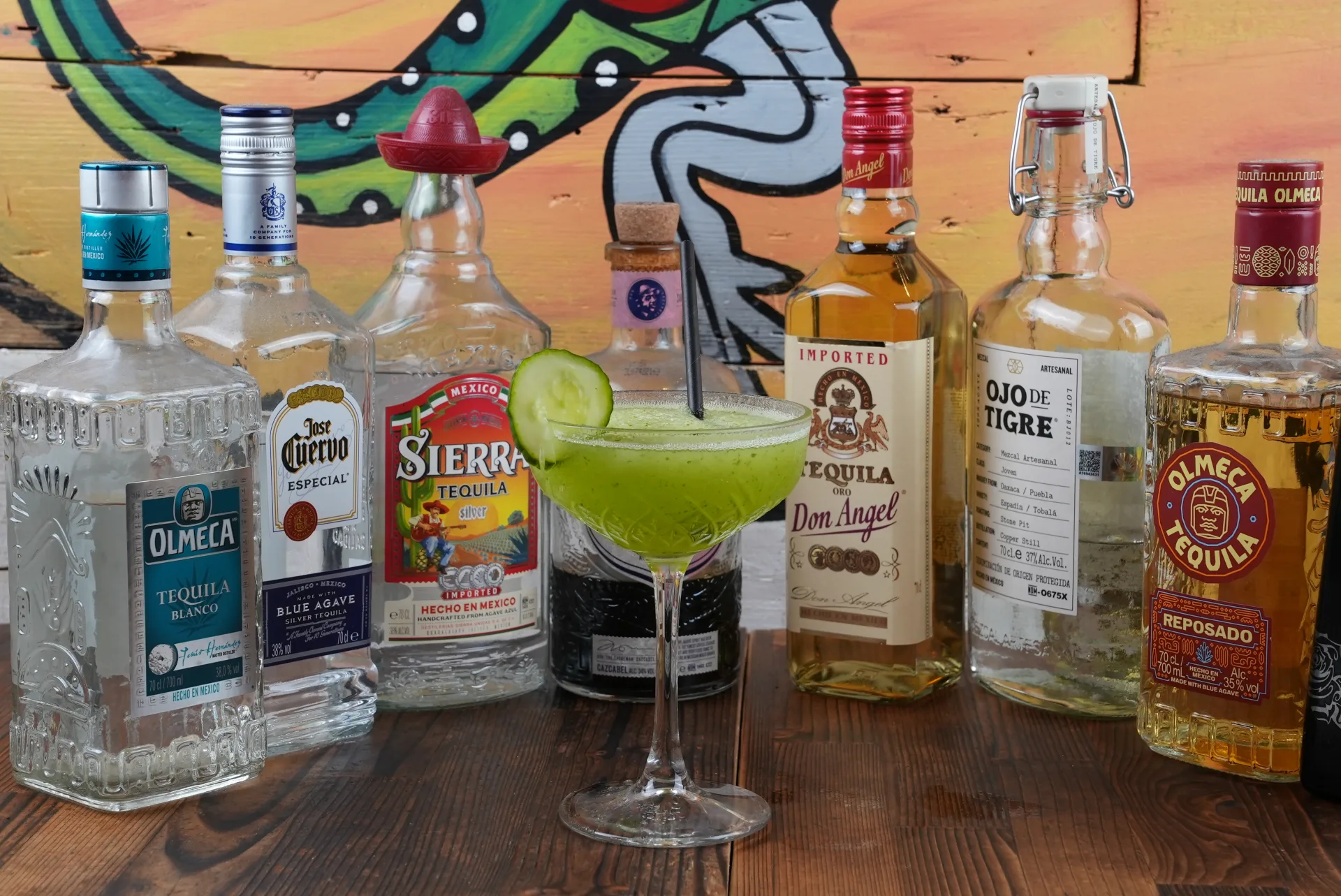
At Frida, ours is a 100% blue agave blanco from Jalisco. Three things matter about that sentence.
100% blue agave. The label "tequila" can legally include up to 49% non-agave sugars (a "mixto"). Mixtos are cheaper and significantly less interesting — they taste hot and one-note. We don't pour them in cocktails and we don't pour them on the rocks.
Blanco. Blanco (or "silver") tequila is unaged or aged less than two months. Reposado is rested two to twelve months in oak; añejo, one to three years. Reposado and añejo are excellent sipping spirits, but in a margarita the oak fights the lime. Blanco lets the agave through unchanged, which is the whole point of building a cocktail on it.
From Jalisco. Tequila by law is made in Jalisco and four neighbouring states. Within Jalisco, the highlands (Los Altos) produce sweeter, more floral agave; the valley (around the town of Tequila) produces earthier, more peppery spirit. We lean valley — the earthier profile holds up better against lime.
The lime, every shake
Pre-bottled lime juice exists. Restaurants use it. We don't.
The reason isn't snobbery — it's chemistry. Bottled lime juice is preserved with sodium benzoate or potassium metabisulphite, both of which round off the citrus edge in a way that's noticeable in a clean cocktail. A margarita with three ingredients has nowhere to hide that flatness. Fresh-squeezed lime is bright, slightly bitter at the edge, and changes structure within a few hours.
Per glass, that's roughly the juice of one lime — about 25 to 30 millilitres, depending on the size of the fruit. We juice on the morning of service. By dinner, the juice is at its peak. By close, it's already softening; the surplus goes home with the bar team.
"A great margarita has nowhere to hide. Three ingredients, all visible."
The orange liqueur — the choice that splits drinkers
The third ingredient is the one no two bars agree on. Triple sec, Cointreau, Grand Marnier, Combier, Pierre Ferrand — they're all orange liqueurs and they all do roughly the same job. The differences matter.
Triple sec is the catch-all term for an unsweetened (or lightly sweetened) orange liqueur. Cheap triple secs taste like sweet orange syrup. Good ones are dry, slightly bitter, and clean. Cointreau is a specific premium triple sec — drier, higher proof, more orange-peel character. Grand Marnier is heavier and cognac-based; it makes a different drink (often called a Cadillac Margarita).
Our default is Cointreau — the upmarket triple sec, drier than the bar standard, with enough bitterness to balance the lime. For guests who prefer a slightly sharper, less orange-forward profile, we keep a quality dry triple sec on the bar as an alternative. Grand Marnier we save for the Cadillac variation. The middle path is where we sit.
The salt thing — and why we ask
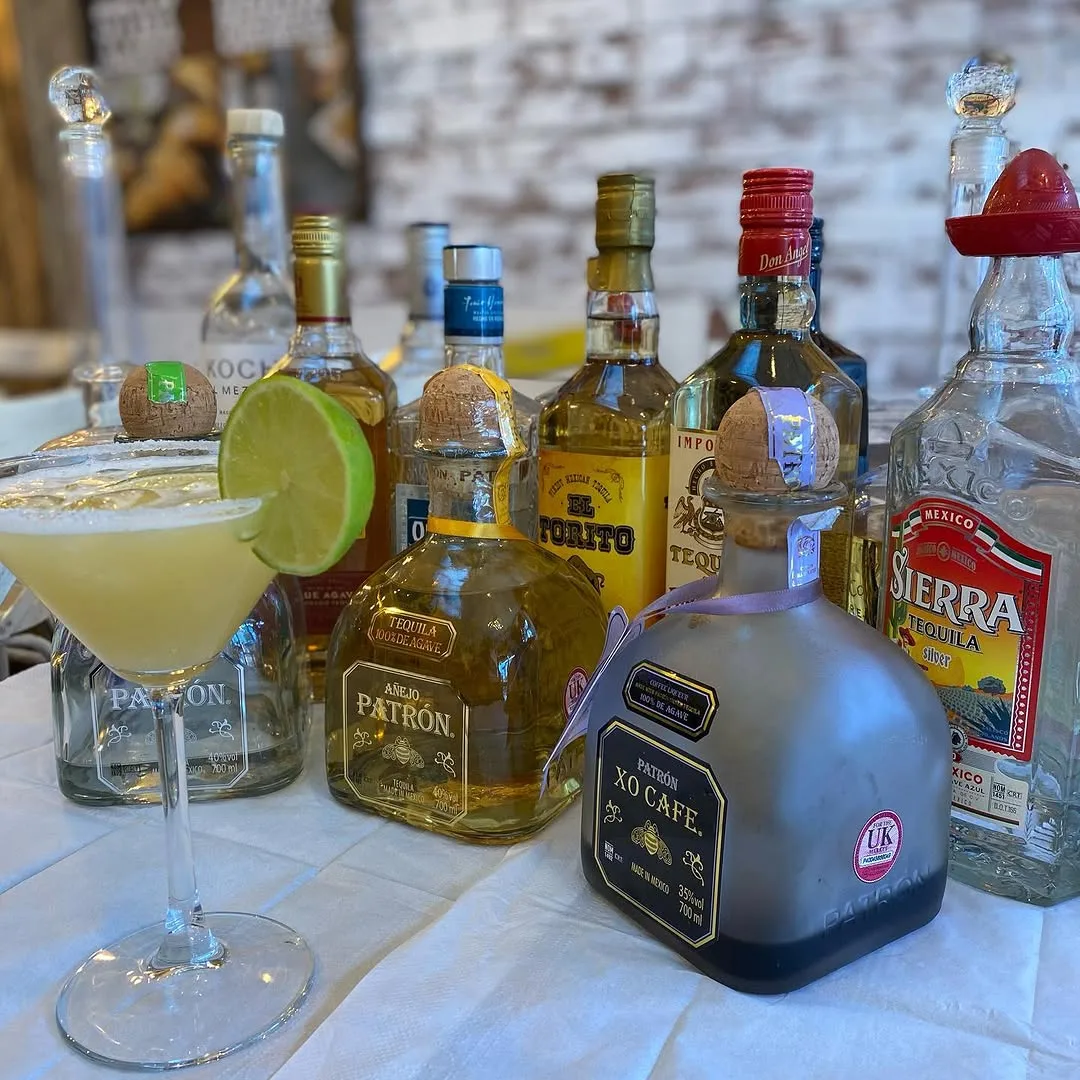
Salt is optional. Half the room expects it; the other half won't drink with it. We ask before we shake.
The technical bit: salt belongs at the lip of the glass, not in the drink. A salted rim works because each sip pulls a small amount of salt onto the tongue, which sharpens the lime. Salt mixed into the drink does the opposite — it dulls. So if you want the salt experience, the rim is the right place for it.
Our default is a half-rim — salt on one side of the glass, none on the other. You decide which side to drink from. It's a small thing. It saves a lot of sent-back drinks.
On the rocks (only)
Frozen margaritas are a different drink. They're slushy, sweeter, and lower in alcohol because the ice dilutes the spirit. They have their place — beach holidays, summer parties — but they aren't what we make at Frida.
Ours is on the rocks. Shaken with cubed ice in a Boston shaker for about twelve seconds, strained over fresh ice, garnished with a lime wheel. The drink lasts about ten minutes before the ice meaningfully dilutes it, which is roughly the time it takes to read a menu and order food. The pacing is part of the design.
Straight up — without ice, in a coupe — is on offer if you ask. It's a shorter, more intense version of the same drink and goes faster. Most guests don't ask.
Where ours sits in Camden
Camden has its share of margaritas. Some places run frozen-machine slushies that are 80% mix and 20% cheap mixto. Some bars charge fifteen pounds for a sip of Don Julio shaken into something that fights with the lime. We sit in the middle: not the cheapest, not the most expensive, with the same recipe served the same way every night.
It's also worth saying what we don't do. We don't run "Margarita Mondays" with discount slush. We don't pour a margarita that tastes different on a Friday than it did on a Tuesday. The drink is a fixed point on the menu — same tequila, same lime, same triple sec, same shake.
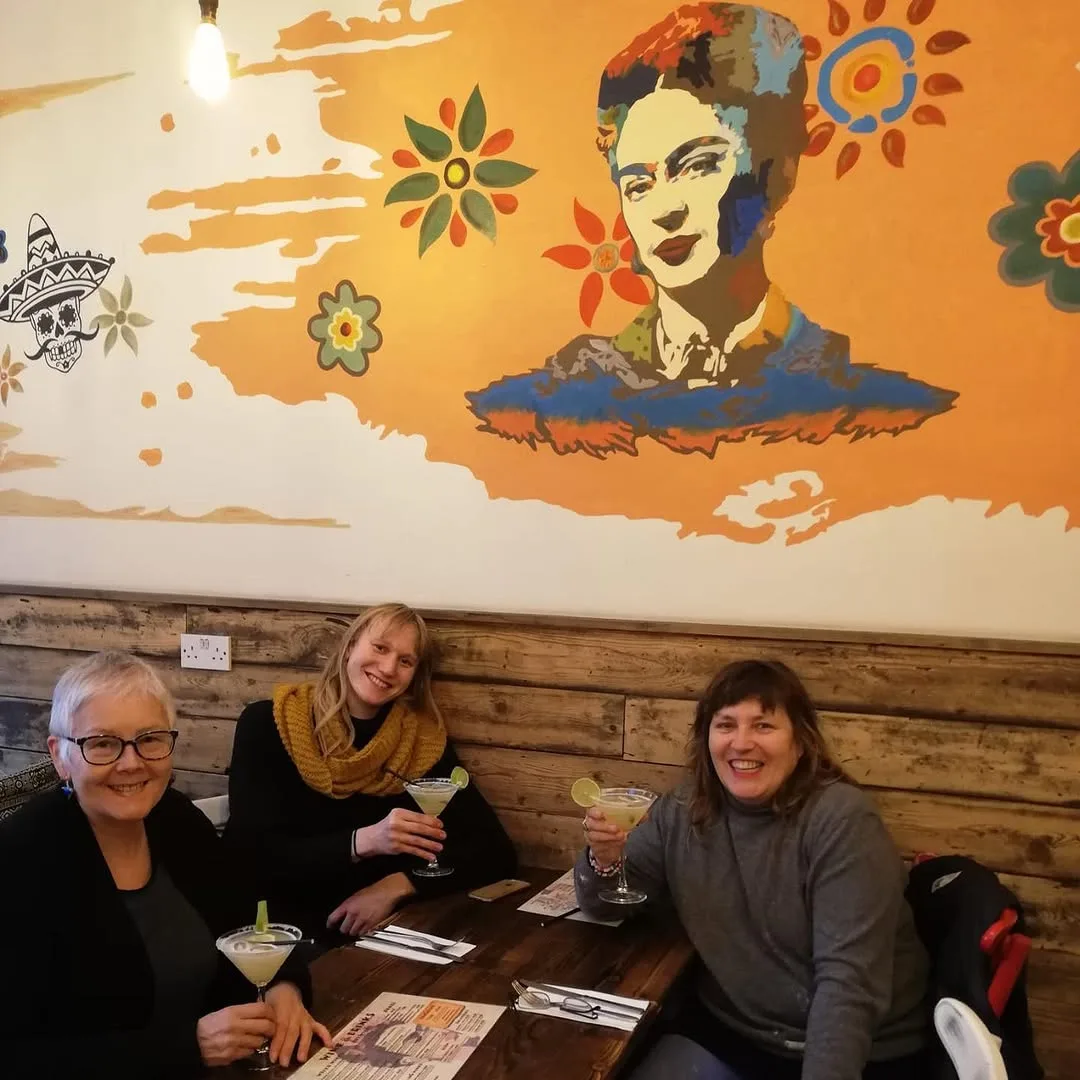
When to come and try ours
The house margarita is on the menu every day we're open. It pairs with most of what comes out of our kitchen — particularly the hand-mashed guacamole we wrote about earlier this week, and anything off the grill.
If you're coming on Cinco de Mayo or any other reason, the bar takes walk-ins; for a full table, reserve in advance. Camden's evenings book up quickly.
Frequently asked questions
Is your house margarita on the menu year-round?
Yes. The house margarita is a fixed item on our cocktail menu — same recipe, same tequila, same shake every night. It's also the most-ordered drink on the bar.
Can I order a margarita without salt?
Of course. Our default is a half-rim — salt on one side of the glass — but we'll skip the salt entirely if you ask. We always check before we shake.
Do you use Cointreau or triple sec?
Our default is Cointreau — the upmarket triple sec — but we also keep a quality dry triple sec on the bar for guests who prefer the sharper, less orange-forward profile. Either way, the bartender will ask which way you'd like it built. The difference is small but real, and worth tasting both at least once.
Do you serve frozen margaritas?
No. Our margarita is on the rocks or straight up only. Frozen versions become a different drink — slushier, sweeter, more diluted — and we serve a single, consistent house version rather than two takes on the same idea.
Can I learn how to make this at home?
We've written a technique-focused guide with the recipe and the shaking method. For groups, our events team can put together a private cocktail masterclass — get in touch through the contact form for details.
Save your table
Frida Camden, 40 Camden High Street, London NW1 0JH. Between Mornington Crescent and Camden Town tube. Open Sun–Thu 10:30–22:00 (last food orders 21:30), Fri–Sat 10:00–23:00 (last food orders 22:30). Book a table online or call us on +44 207 383 3733. ¡Salud!