Tacos al pastor are not Mexican. Or rather — they're as Mexican as the Lebanese immigrants who brought the shawarma trompo to Mexico City in the 1930s, and then watched their countrymen's kids turn it into something else entirely. The taco that now defines Mexico City street food started its life as lamb on a rotating skewer in Beirut. It became pork on a vertical spit, with adobo and pineapple, only after it crossed an ocean and settled into the neighbourhoods of Roma and Centro.
This is the story of where pastor came from — and the version we cook every night at Frida Camden.
Beirut to Mexico City: a journey that lasted a generation
Between the 1880s and the 1930s, something close to 100,000 people left what is now Lebanon and Syria for the Americas. The reasons were the usual ones — Ottoman pressure on Christian villages, conscription, taxes, the unevenness of a collapsing empire. Most were heading for the United States or Brazil. A smaller wave found Mexico, and a smaller portion of that wave settled around Mexico City, in the working-class barrios of Centro and what became Colonia Roma.
They brought what every diaspora brings: a language, a faith, a few recipes. The recipe that mattered most for the future of Mexican street food was shawarma — a lamb-and-spice preparation cooked on a vertical rotating skewer, sliced thin, wrapped in flatbread with yoghurt or tahini. It had reached the Levant from the Ottoman döner-kebab traditions a few generations earlier. By the time it arrived in Mexico, it had been a Lebanese street dish for the better part of a century.
In Mexico City the children and grandchildren of those immigrants opened restaurants in the 1930s and 1940s — the first tacos árabes, served on thin flour flatbreads that looked more like Lebanese markouk than corn tortillas. Lamb. Yoghurt. The trompo still spinning. The trail Wikipedia traces through Puebla and the capital is documented enough that the family names — Galas, Bichir, Tabe — still come up when Mexican food historians write about origin.
The trompo, and how it changed
Then, somewhere across two decades, the dish stopped being Lebanese and started being Mexican. The mechanism was the children. The first-generation parents kept making tacos árabes on lamb. Their kids — born in Mexico, eating Mexican food at school and at home — adapted. Pork replaced lamb because pork was what Mexico City butchers stocked and what Catholic Mexico wasn't restricted from eating. The yoghurt sauce disappeared. The flour flatbread shrank into a corn tortilla. The trompo stayed.
The seasoning shifted hardest. Lebanese aromatics — cumin, oregano, sometimes a touch of cinnamon — got pushed into the back of the mix, and Mexican adobo took over the front. Dried guajillo and ancho chillies. Achiote, the dark-red annatto paste, for both colour and earthiness. Garlic, vinegar, a measure of pineapple juice. Lime to finish.
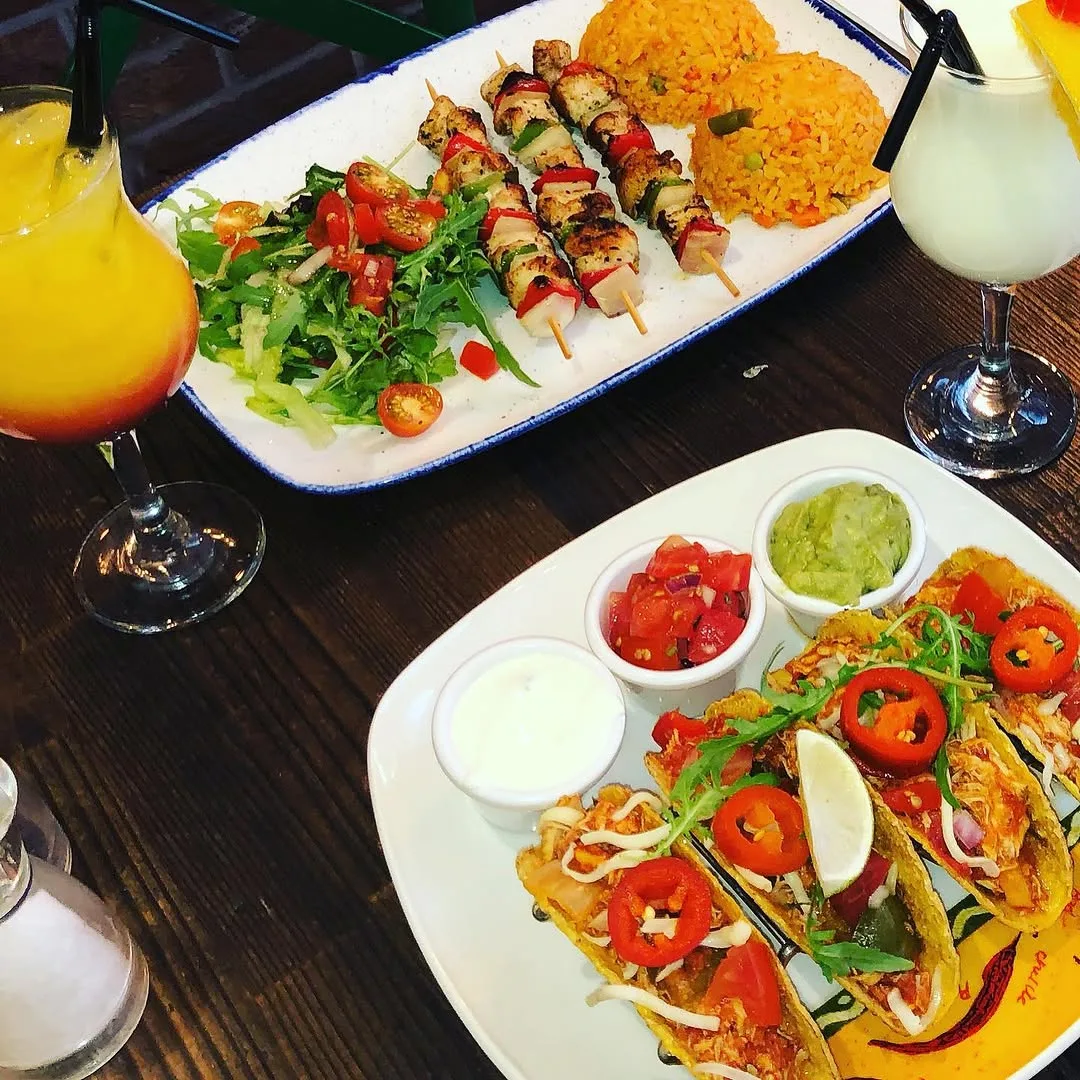
By the 1960s the dish had a new name. It wasn't shawarma. It wasn't tacos árabes. It was tacos al pastor, and within a generation it was on every block in Mexico City. Today it's the city's defining street food. The Lebanese origin is acknowledged on a few menus in the historic centre, and politely forgotten everywhere else.
Why "al pastor" — and what it doesn't mean
The name is a small Spanish wordplay that's tripped up generations of visitors. Pastor means shepherd. The literal translation is "shepherd-style tacos" — which sounds like it should imply lamb (the shepherd's animal), and which is exactly the joke. The pork came after the lamb, but the name kept the lamb's vocabulary. It's a quiet acknowledgement that this dish used to be something else.
There's a second reading. In some accounts, the vertical trompo itself reminded Mexico City cooks of a shepherd's staff — tall, vertical, central — and that visual stuck. Either way, the name has nothing to do with how the dish is cooked today. It points backwards, to a Lebanese-Mexican past most diners no longer think about while ordering three of them at midnight.
The pineapple argument
If you've eaten pastor in Mexico City you've seen the move: the taquero shaves pork off the trompo with a wide knife, catches it in one hand, and with the other hand flicks a small wedge of pineapple from the top of the spit onto the same tortilla. The pineapple is so iconic now that most diners assume it's been there since the beginning. It hasn't.
The pineapple was added in Puebla and Mexico City somewhere in the 1960s, after pastor had already become pork. There are competing claims — most of them undocumented — but the consensus among Mexican food writers is that pineapple was a late addition, possibly to soften the marinade's heat, possibly to mimic the sour-fruit notes that yoghurt had once provided in the Lebanese original. Either way, it became standard in the capital and remained controversial outside it.
Northern Mexico still serves pastor without pineapple. Some old-guard Mexico City taquerías refuse to put it on. Younger generations expect it. The argument has never been settled — and probably won't be.
"Every diaspora dish keeps half its old country and trades the other half for the new one. Pastor is just unusually honest about which halves it kept."
How we cook it at Frida
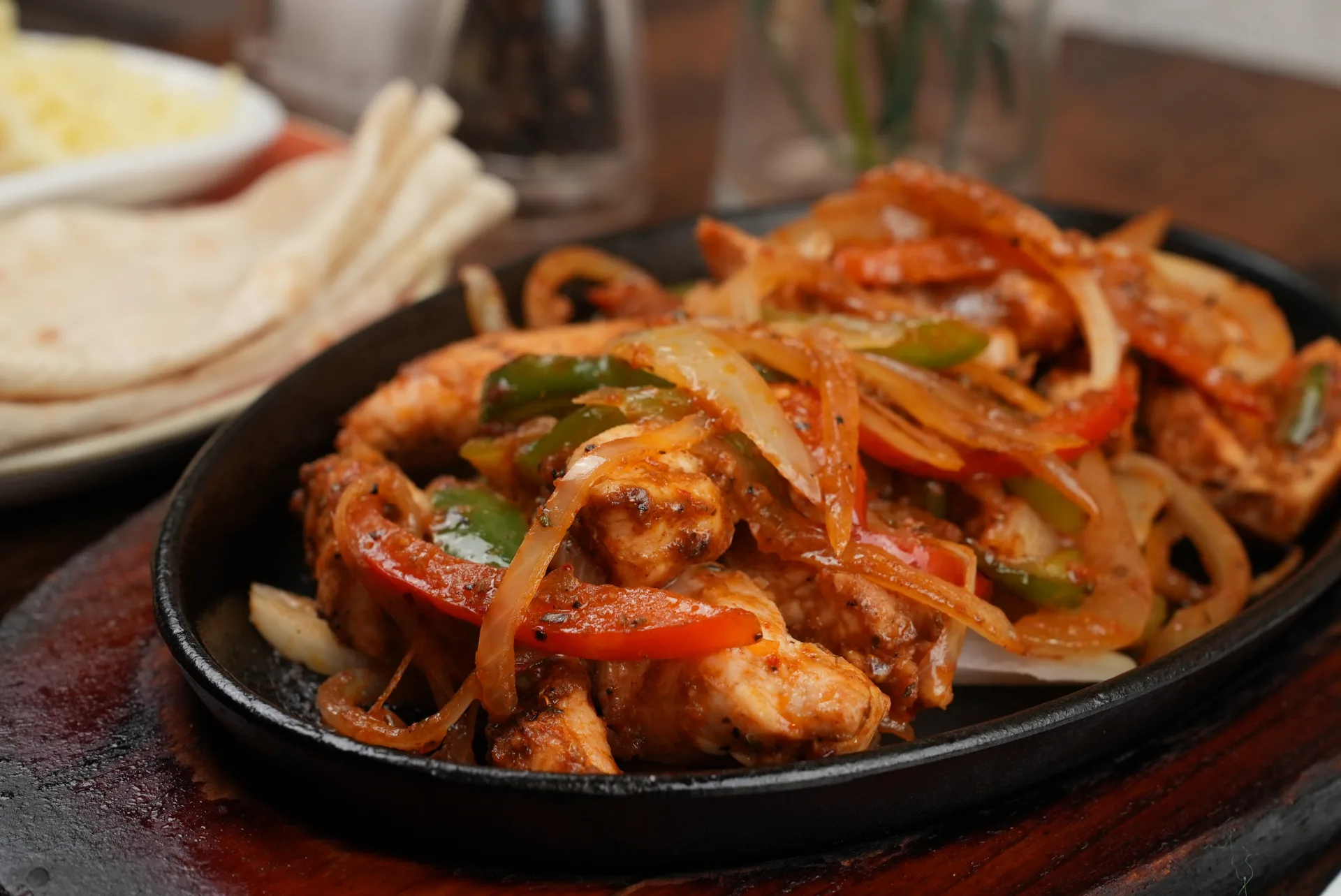
We don't run a trompo. The vertical spit is part of the romance of Mexico City pastor, but it requires a constant queue of customers — and a lot of pork — to work without drying the meat. In a London restaurant where service runs in waves, it doesn't make sense. So we cook pastor the way most serious Mexican kitchens outside CDMX cook it: marinated, then flash-grilled at high heat to char the edges, served with the same accompaniments that arrive at any Mexico City stand.
The marinade is the part we don't compromise on. Dried guajillo and ancho chillies are rehydrated and blitzed with a measure of garlic, white onion, achiote paste, cider vinegar, fresh orange juice, pineapple juice, oregano, cumin, a small amount of clove, and salt. Pork shoulder is cubed, mixed through, and left to marinate overnight. Twelve hours is the minimum. Eighteen is better.
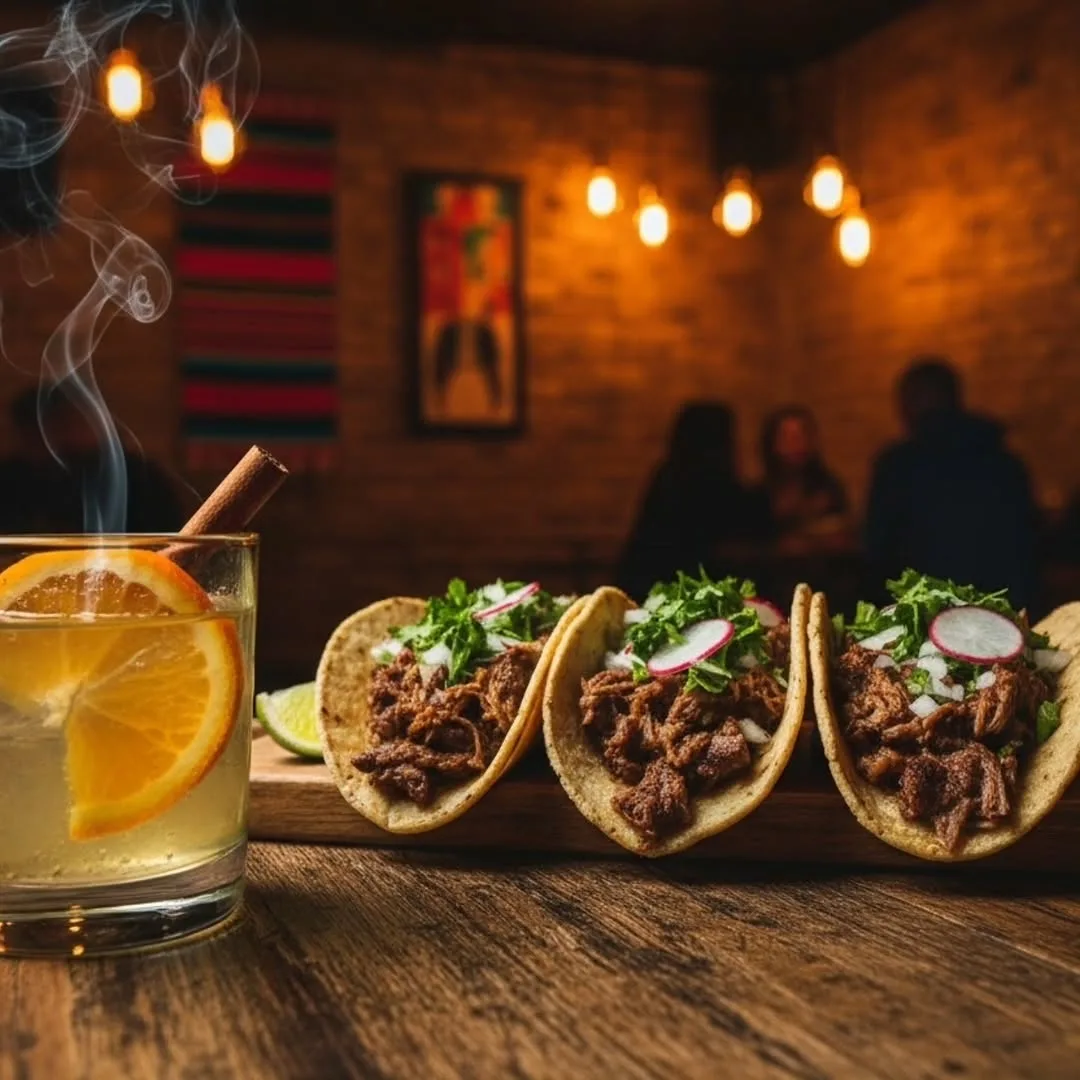
The next day the meat hits the plancha at high heat. Three minutes a side, no more, in small batches so the surface chars before the inside dries. It's served on small corn tortillas warmed on the same flat-top, with a slim wedge of charred pineapple, a small mound of finely diced white onion, fresh coriander, and a halved lime on the side. A spoon of salsa verde is offered. No yoghurt. No flour tortilla. The Lebanese origin shows up in the spice mix and nowhere else.
What we don't add
No cheese. No sour cream. No lettuce or tomato in the taco itself — that's a North American garnish, not a Mexican one. A pastor taco is meat, tortilla, onion, coriander, lime, optional salsa. The same five things on every street corner in Mexico City. We don't move on this.
Where pastor sits in Mexican street culture
To eat pastor properly is to eat it standing up, late at night, after a long evening of something else. In Mexico City the taquerías open at 7 p.m. and stay open until 3 a.m., and the trompo is hottest — the surface most caramelised — somewhere around 11. The order is two or three tacos at a time, eaten directly off the small paper plate, washed down with a Mexican Coke or a Victoria.
This is the cultural register pastor occupies. It's not a celebration dish like mole or a seasonal one like Cinco de Mayo's chiles en nogada. It's an everyday taco, eaten in volume, by people standing up. The price keeps it democratic — in Mexico City a pastor taco runs around 25 pesos, the equivalent of just over a pound. You can have three or six. The taquero won't notice the difference.
It's also one of the few dishes that crosses every social class. Office workers eat pastor at the same counters where bricklayers eat pastor. The same trompo turns for both. That's part of why it became the city's defining dish — not because it's the most refined, but because everyone agrees on it.
On our menu
You'll find pastor on the starters list at Frida Camden, served as three tacos to a plate. We list it among our signature first-visit dishes for a reason — if you've never had pastor, you should have it before anything else on the menu, and you should have it with something cold, ideally one of our house margaritas or a Mexican lager.
FAQs
Are tacos al pastor really not Mexican?
They're Mexican now — but their technique and trompo come directly from Lebanese shawarma, brought to Mexico City by Lebanese-Christian immigrants in the early 20th century. Mexican cooks adapted lamb to pork, added adobo and pineapple, and turned shawarma into pastor over two generations. The dish is Mexican; the lineage is Lebanese-Mexican.
Why is it called "al pastor" if it's pork?
Pastor means shepherd, the animal of which is lamb. The name is a leftover from when the dish was lamb on a trompo — the Lebanese original. When pork replaced lamb in the 1940s and 1950s, the name stuck. Some say the vertical trompo itself looked like a shepherd's staff, which reinforced the name. Either way, the lamb is gone and the name remains.
Do you serve pastor with pineapple?
Yes — a small wedge of pineapple, charred on the same flat-top as the pork, on top of each taco. Pineapple was added to pastor in the 1960s and became standard in Mexico City. Some old-school taquerías reject it, but for most diners the sweet-sharp note from charred pineapple is part of what makes pastor pastor.
Do you cook on a real trompo?
No. The vertical trompo works best when there's a constant queue of customers shaving pork off it every few minutes — otherwise the outer layer dries while the inner stays raw. In a service-wave restaurant like ours, we marinate pork shoulder overnight and flash-grill it on a plancha at high heat. Same flavour, same char, no waste. Most serious pastor outside Mexico City is cooked this way.
Is pastor spicy?
Mildly. The marinade uses guajillo and ancho — both warm chillies rather than hot ones — so the heat is gentle. The pineapple cools it further. If you want more heat, we serve salsa verde on the side and a hotter salsa roja on request. Pastor is intended to be eaten in volume, so it's never built to overwhelm.
Save your table
Frida Camden, 40 Camden High Street, London NW1 0JH. Between Mornington Crescent and Camden Town tube. Open Sun–Thu 10:30–22:00 (last food orders 21:30), Fri–Sat 10:00–23:00 (last food orders 22:30). Book a table online or call us on +44 207 383 3733. Buen provecho.