Before Frida Kahlo was the painted face on a million tote bags, she was a cook. Her kitchen at La Casa Azul — the cobalt-blue family home in Coyoacán, Mexico City — was where she fed her artist friends, her political guests, her husband Diego, and herself, between paintings. The kitchen still exists. The recipes she fed people from it are still made in Mexico. Some of them are on the menu at Frida Camden. Here's where the connection comes from.
La Casa Azul — the kitchen behind the painter
Frida Kahlo lived most of her adult life in La Casa Azul, the cobalt-blue house in Coyoacán that she'd grown up in and that became her home with Diego Rivera after their (famously turbulent) marriage. The house is now a museum. It draws around 25,000 visitors a month.
The kitchen at La Casa Azul is one of the rooms most visitors notice. It's tiled in yellow and blue. The walls are hung with pewter cookware. There's a long wooden table where Frida prepared food and where her friends sat to eat it. The kitchen looks like a kitchen, not a museum piece — the pots are on the hob, the herbs hang from the rafters, the cooking utensils sit out on the counter.
This was the room Frida used to host. The painted face came later, after the broken back, after the failed marriages, after the polio that she'd had since childhood made standing at the easel difficult for hours. The kitchen was where she could be useful when the studio was hard.
What Frida cooked
The food Frida fed her guests was traditional Mexican. Mole — almost certainly poblano-style, the chocolate one, Puebla being the regional reference for many central Mexican home cooks. Pozole — the slow-cooked hominy stew that's national rather than regional, made for celebrations and large groups. Chiles en nogada — the dish that, more than any other, gets associated with her kitchen. It's a stuffed poblano chilli covered in walnut cream sauce and topped with pomegranate seeds; the colours (green, white, red) are the Mexican flag, and the dish is traditionally served around Mexican Independence Day in September.
She also fed her guests, by all accounts, properly. Diego liked his food and Frida cooked for two with care. There are surviving recipes attributed to her — most famously through the cookbook Frida's Fiestas, written by her stepdaughter Guadalupe Rivera Marín, which records meals she remembered from the Casa Azul kitchen.
The cookbook is plainer than people expect. There's no theatre. The recipes are home cooking — beans, rice, slow-cooked stews, fresh tortillas, salsas. Mexican cooking the way Mexican people actually eat it, rather than the way restaurants serve it abroad.
What we took from her — directly
When we opened in 2011, we'd been into the Casa Azul kitchen the previous summer, on a research trip that was meant to be about Mexico City's modern restaurants. The Casa Azul was a side stop. It became the most useful afternoon of the trip.
Some specific things that came back with us:
The colour scheme. The cobalt blue around the bar, the marigold accents on the upholstery, the deep jade in the small dining-room. None of these are random. They are from the rooms of La Casa Azul, transposed into a Camden basement-and-ground-floor.
The plate sizes. Frida's table at the Casa Azul was set for shared eating — small dishes, several at a time, passed around. We don't run our service that way exactly (London restaurant economics make plate-by-plate too expensive at our price point), but the appetizer board and the way the fajita skillets land — designed for two to share — is a small carry-over.
The chiles en nogada. The dish that connects most directly to her kitchen. We serve it as a special during September (around Mexican Independence Day) and occasionally for Día de los Muertos. It's not on the everyday menu because the walnut cream needs fresh walnuts for the right texture, and the season for that is short.
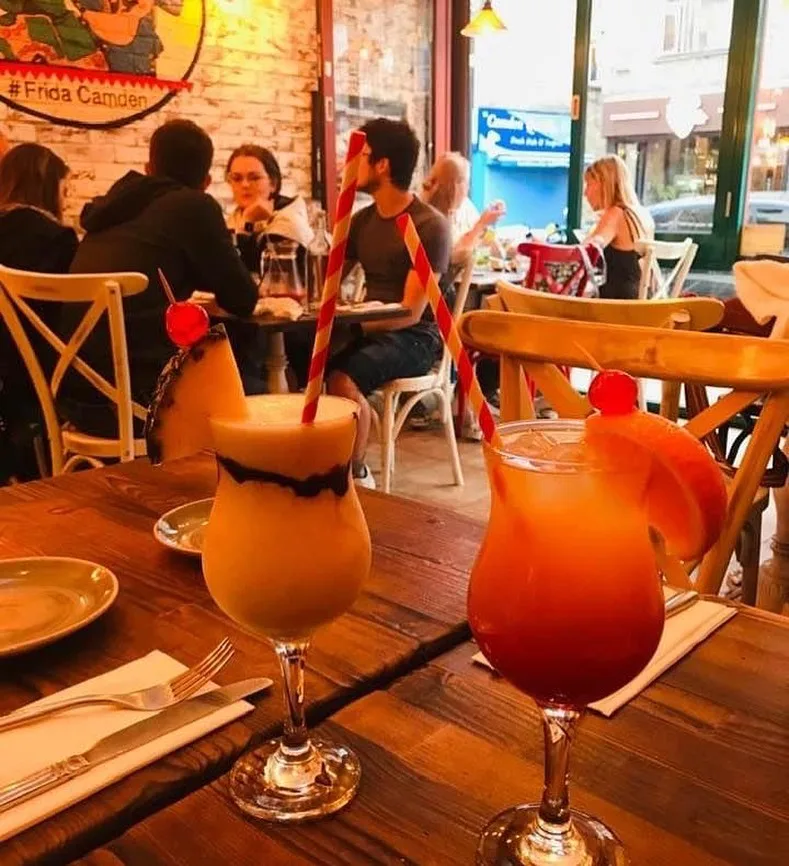
The cocktails named after her paintings. Five of the cocktails on the bar menu are named after specific Kahlo works — the Self-Portrait with Thorn Necklace (a dark, slightly bitter mezcal drink), the Two Fridas (a duo of contrast cocktails meant to be ordered together), the Broken Column (a martini-style with a long, sharp finish). The connection is decorative rather than literal, but it's there.
What we didn't take
This part matters as much as the previous one. We didn't open as a Frida-Kahlo-themed restaurant in the way that one does in 2026 — gift-shop-style, postcards on the wall, branding-heavy. The Casa Azul reference is structural, not surface. There's no Kahlo merchandise on sale. There's one mural (in the back room, the one you've already seen) and that's where the visual nod stops.
The reason: we wanted to honour the cooking, not the visual brand. Frida-the-painter is a global commercial presence. Frida-the-cook is a quieter person who, by all accounts, would have found the merchandise odd. The kitchen-first version is closer to who she actually was, and closer to what the food on our menu actually deserves.
"The studio painted Frida the icon. The kitchen made Frida the person. We took our cues from the kitchen."
The dishes from her table that you can order at ours
Three direct connections to the Casa Azul kitchen are on the Frida Camden menu most weeks:
Mole poblano — traditional, on the everyday menu. Our long writeup of the recipe covers how we make it. It's the dish closest in spirit to what Frida would have served Diego on a quiet Sunday.
Chiles en nogada — September only, occasional through autumn. The walnut cream is made the day of service from fresh walnuts (cracked that morning, peeled by hand). The pomegranate seeds come from the same Brixton supplier we've used since 2014. It's the most labour-intensive dish on the menu and the closest thing we have to a Casa Azul home dish.
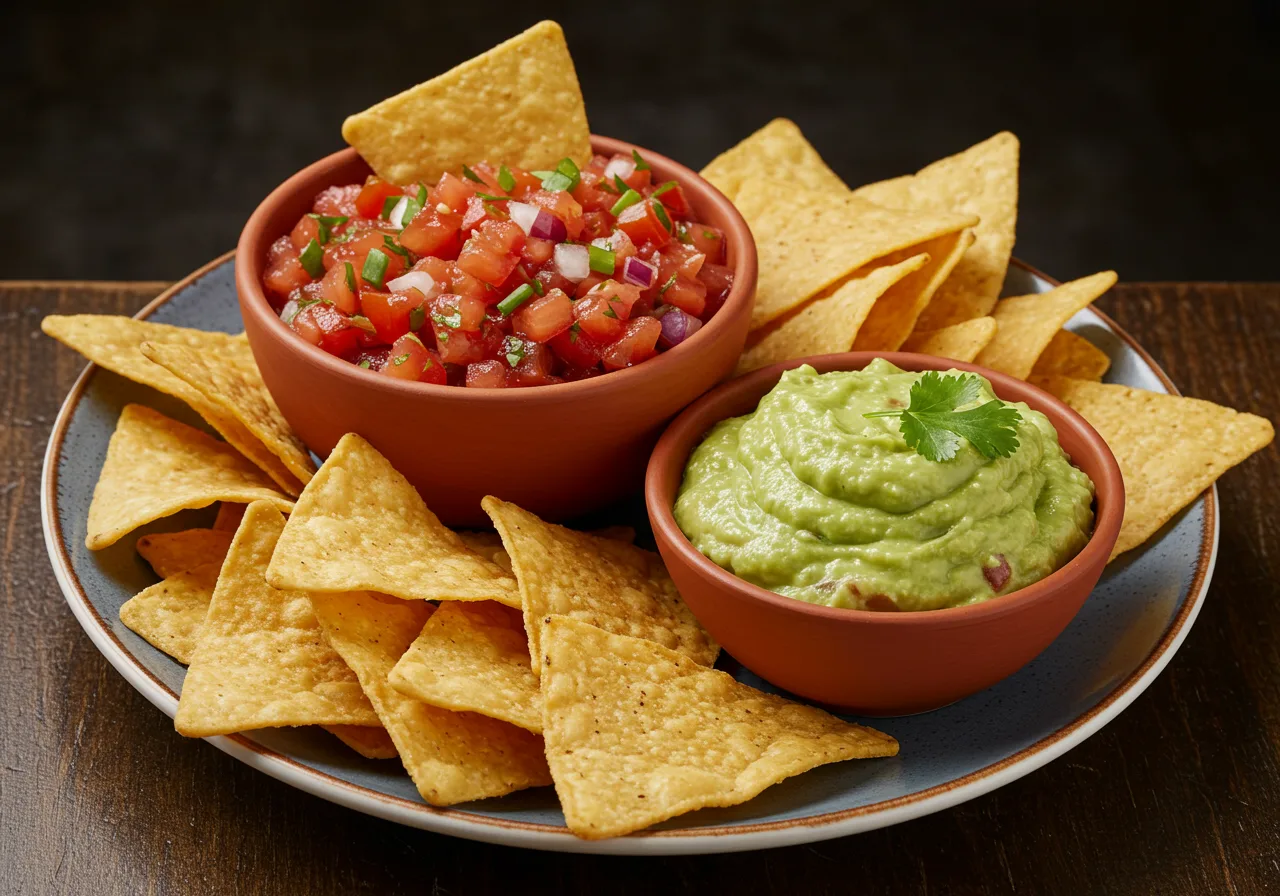
The shared-platter starter — guacamole, salsas, queso fundido, warm tortillas. Less specific to Frida's kitchen than the other two, but in the spirit of the way her table was laid out: several small things to share, generous portions, no precious plating.
The mural
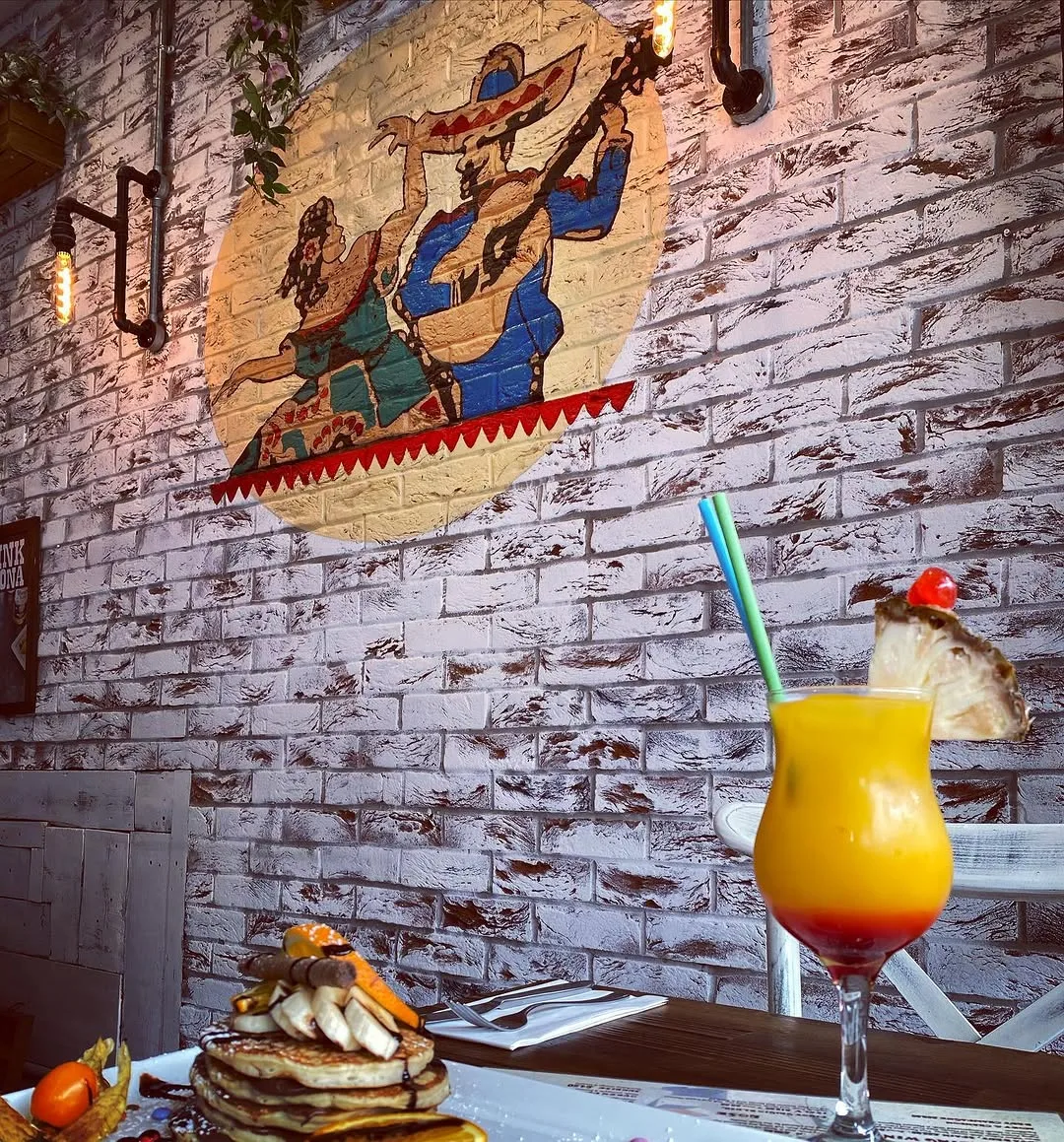
Behind the bar, on the back wall of the small dining room, is the mural. It's about three metres tall, painted in 2013 by a Camden-local artist, Patricia, who grew up in Mexico City and now lives in Stoke Newington. The image is inspired by the courtyard of La Casa Azul — the painted plant pots, the marigold border around a central blue panel, the small details of fruit and bird and the figure of Frida in the corner with her hair up and a small smile.
It is not a Kahlo painting. Patricia is clear about that. It is a Camden artist's response to her work, painted on a Camden wall, in a restaurant whose food owes something to the kitchen Frida cooked in. It is the most-photographed thing in the restaurant. We've turned down four sponsorship offers to repaint it for short-term commercial use. It is staying.
If you'd like to read more
The most useful general English-language source is Hayden Herrera's Frida: A Biography of Frida Kahlo (1983) — long, comprehensive, the standard. For the kitchen specifically, Frida's Fiestas: Recipes and Reminiscences of Life with Frida Kahlo by Guadalupe Rivera Marín and Marie-Pierre Colle is the right book; it's where we got several of the connections we've used here.
If you're in Mexico City, the Casa Azul museum is open Tuesday through Sunday and worth the queue. The kitchen is on the ground floor, second room on the left after the main entrance. Photography is allowed in most rooms; we'd encourage you to put the phone down for at least the first walk-through.
Frequently asked questions
Did Frida Kahlo really cook?
Yes. Cooking and entertaining were a regular part of her domestic life at La Casa Azul, where she lived for most of her adult life. Recipes attributed to her — recorded in Frida's Fiestas by her stepdaughter Guadalupe Rivera Marín — describe traditional Mexican home cooking: mole, pozole, chiles en nogada, slow-cooked beans, fresh tortillas. She wasn't a professional cook, but by all accounts she fed her guests well.
Are you officially associated with the Casa Azul or the Frida Kahlo estate?
No. Frida Camden is independent and has no formal affiliation with the Casa Azul museum, the Banco de México (which holds Kahlo's image rights) or any Kahlo licensing organisation. Our connection is creative and culinary — we draw on the cooking and the colour scheme of La Casa Azul because we admire both. We don't sell Kahlo merchandise.
Which dishes on your menu come from her kitchen?
Most directly: mole poblano (everyday menu), chiles en nogada (September seasonal), and the shared-platter starter that follows the spirit of her hosting style. Her cookbook also influences how we think about brunch and home-style cooking, but those connections are looser.
When can I order chiles en nogada?
September, primarily — Mexican Independence Day falls on the 16th of that month and the dish is traditional around it. We also bring it back occasionally for Día de los Muertos and during autumn, when fresh walnuts are at their best. It's not on the menu year-round because the walnut cream needs fresh nuts for the right texture.
Can I see the mural without booking a table?
Yes — we don't gatekeep the photograph. If the bar is quiet, walk in, ask the staff, and most of the time someone will let you stand in front of the mural for a moment. On Friday and Saturday evenings we ask that you wait until the dining room is between services, since photographs through tables of eating guests aren't great for either side.
Save your table
Frida Camden, 40 Camden High Street, London NW1 0JH. Between Mornington Crescent and Camden Town tube. Open Sun–Thu 10:30–22:00 (last food orders 21:30), Fri–Sat 10:00–23:00 (last food orders 22:30). Book a table online or call us on +44 207 383 3733.